
On Somatic Composition Art
an intersection between touch, experiencing and music composition technique

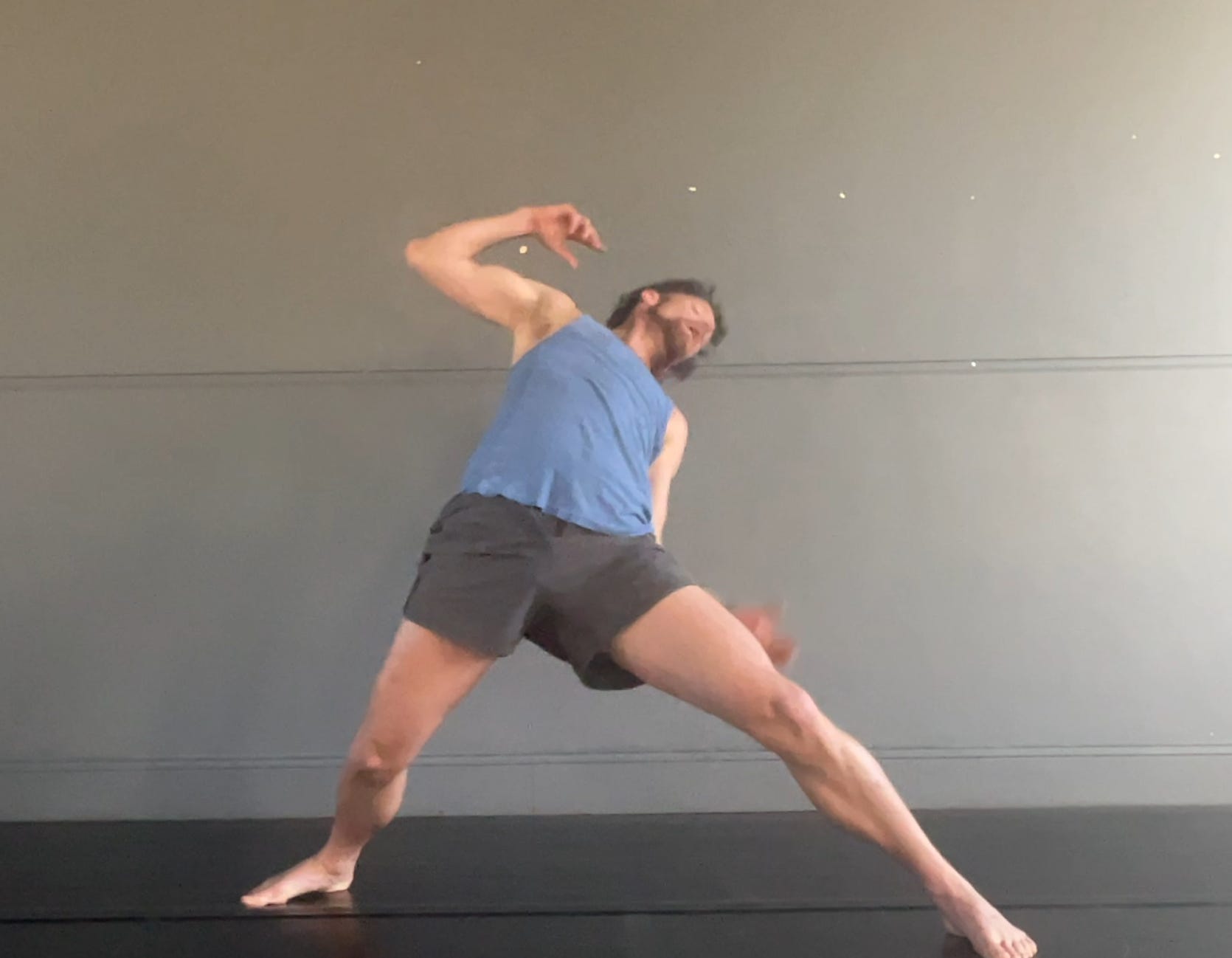
Earlier this year I got into exploring massage as a way of earning a living whilst completing a Masters in Creative Arts Therapy, and continuing to develop my artistic practice in performance and composition. Massaging friends and exchanging with professionals helped me revive and consolidate my knowledge from the courses I’d previously done in energy work and massage as well as the lessons I’d gleaned from the many massages I’d received and provided over my life.
Since beginning a new massage business 8 months ago I’ve given about 300 bodywork experiences ranging from remedial massage through to thoughtful (and sometimes theatrical) creative sensual explorations. During that time I’ve also completed my first year of a masters degree and continued developing artistic concepts and performing in both solo and group settings.
The transcontextual potential of music composition concepts, movement concepts, improvisation concepts and fundamental arts therapy concepts exploded into my mind with each massage. I couldn’t help but start to approach massage as an artistic practice, specifically, a composition practice, informed by therapeutic approaches.
When learning to become a composer, and probably any artform I imagine, we’re encouraged to keep a creative journal. Reflection accelerates learning by allowing a time to consider questions like; how did I feel, what works, what didn’t work, what inspired me etc. Applying this developmental method to massage made sense to me, so I took de-identified notes on all the experiences I was having as a form of self-directed research.
Subconsciously and consciously applying a multimodal approach to the creation of somatic experiences for clients revealed the power of reflexivity, conscious approaches to touch (creative and remedial), felt sense, and improvised composition forms within a bodywork context.
There’s many words that intersect between these disciplines which are synonymous in intrinsic meaning. “Composition” in music is akin to “Sequence” in massage, “Choreography” in dance or “Emerging Form” in improvisation, for example. Of course there are nuances of context which don’t easily translate, but the terminology, when ported from one context to another, gets me excited.
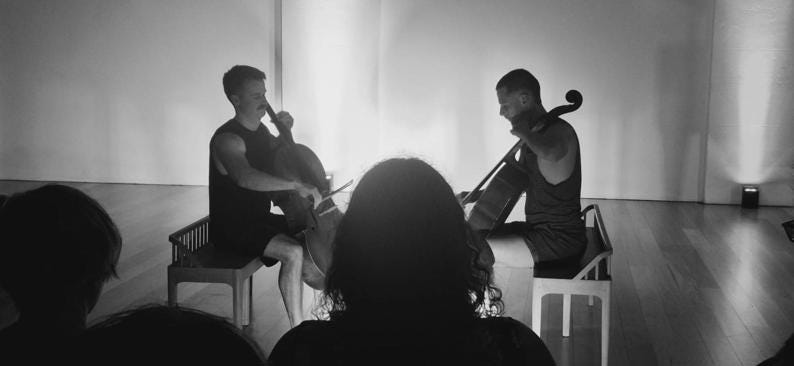
One such term is “Timbre”.
“Timbre” in music means a certain quality of sound which is physically defined by the ratio of amplitudes between the many pure frequencies that form most sounds. When we speak, our vocal chords produce a sound full of pure frequencies which we then affect the ratio between using our mouths and how we’ve learned to control all those muscles to a degree of precision and speed that allows us to form words. To measure, record, and transmit (digital or analogue or both) audio information that allows us to determine the difference between a bassoon and a baboon sounding the same note, sound is analysed in many fractions per second (if done digitally) or a very precise mechanical impression is made in real time (magnetic tape or vinyl record). The detail is exciting (for nerds like me anyway!).
Applying a classical music composition training understanding of the word “Timbre” to the concept of “Qualities of Touch” implies extremely detailed sensing and understanding of the relationship between that which is being transmitted (touching) and that which is being received (the sensation of being touched). As with the quality of music, the quality of touch can be symbolic, pure physical, have specific meanings innate to the individual, and have cultural meanings that are widely shared.
Approaching the Quality of Touch with detailed attention (particularly with journaling), drawing from many lived experiences of touch (from various contexts; parents, family, friends, lovers, massages, in nature, every day), creates a language of touch which can be drawn from; creating a somatic language unique to the artist providing it.
As with contemporary classical music, there are qualities of touch which are desired by some but not others, there’s qualities of touch which are known in wider popular cultures as well as those which are considered more experimental in nature (or downright painful and to be avoided). We all have a personal taste in music, and we all have a personal taste in touch, but just about everyone can enjoy soothing, tonal, contrapuntal, elegant piano music as much as just about everyone can enjoy a slow, symmetrical, 2-hand tickle on the back. Stick ‘em together (in appropriate lighting, setting, etc) and most people experience temporal transcendence and walk away refreshed, in awe of the magic.
The magic is in them. It is their relationship to experience which has been developed in both nature and nurture. To align music, touch, ambience (and costuming, character etc) in such a way powerfully transmits to most bodies an amplified feeling. This can be done for calming tranquility, as much as it can be done for erotic sensuality.
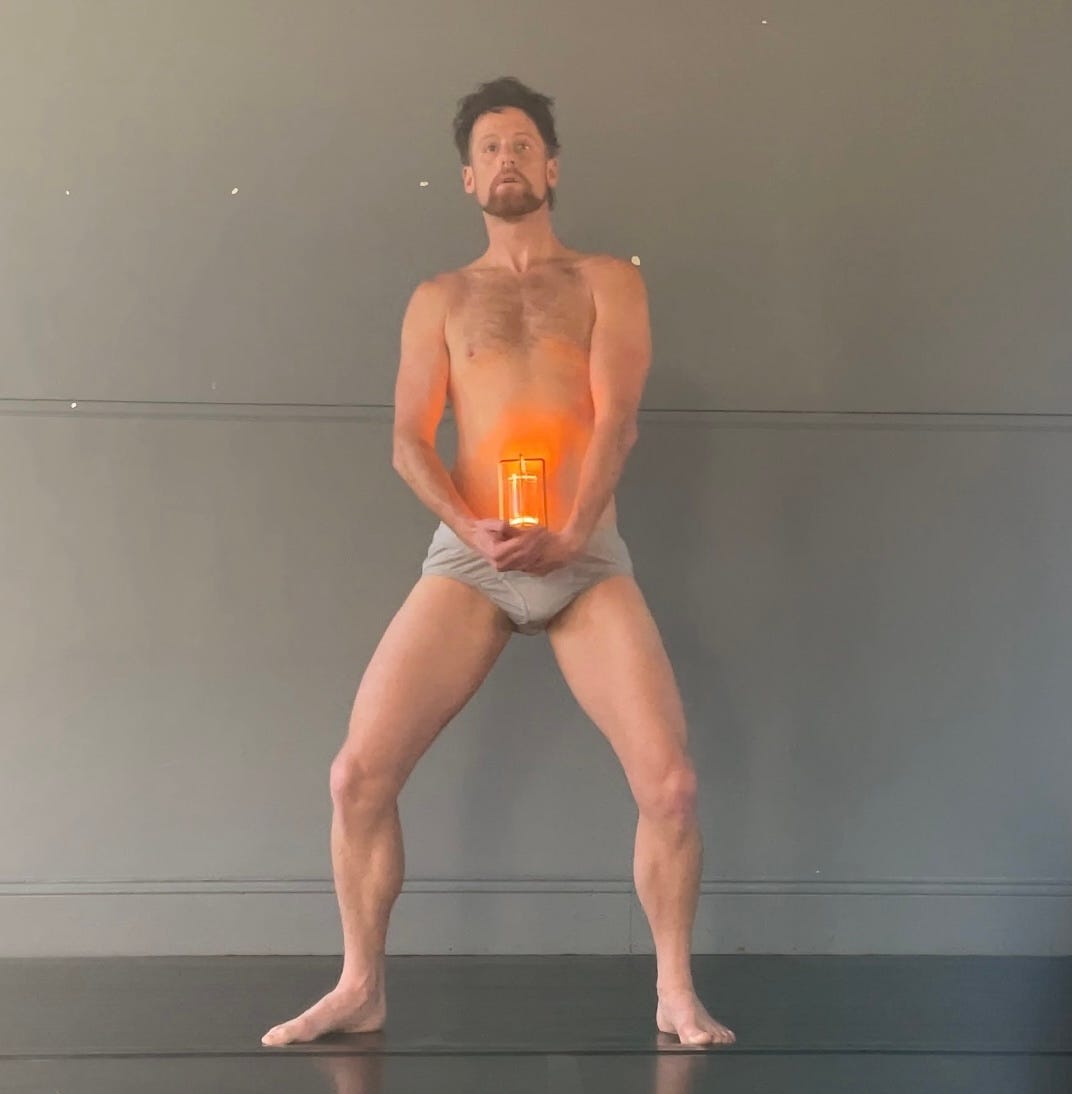
In music composition training we learn certain types of music can (and do) create different states in listeners. We learn to break the music down to its minutia so we are then able to construct our own expressions for listeners of that which we want to be understood or let out. It’s probably the same with interior design and visual art. The same thing is done in massage training, where we break down touch into all its components; anatomical, situational, mechanical and durational components (a lot like singing, or playing the cello).
So I’m increasingly coming towards the idea that I offer “Somatic Composition Art” experiences. As a bodywork artist I draw on all the information I have in regards to the body systems, sensitivities, perceptions and aspects of being (physical body, conscious body, emotional body, energetic body and spirit body) as my intention is to create an experience for the whole sensing/experiencing person I am providing a service to; mainly through the modalities of touch, sound, breath and dialogue.
On one hand I improvise a series of pressures, surface area sizes, densities, temperatures, textures, speeds and sensations (using my various bones, muscles and skin types as surfaces) on the various surfaces of the person I am providing an experience for. This is the objective, phenomenologically observable part.
Some of the movements and positions have cultural significance and/or an instinctual mammalian significance. These can be consciously (and unconsciously) included as part of an experience to elicit/inspire/influence specific responses of feelings or thoughts. There are some which are universal (such as a full-bodied hug or having a handshake), whilst others are specific to sub-cultures or even have idiosyncratic meaning for an individual (including trauma-related). These can be found, observed and defined as well. Some responses sought by my clients have been that of calming, eros, and focus.
But there is a part of the art form which is something more mysterious than the art of touch alone and is one that is shared with all the practices I have. It’s the art of resonance.
Resonance is like an energy that shifts people into different cognitive states. I have some theories, and I’ll be sharing them over the course of the next year I’m sure, along with the relevant ethical considerations.
I’d be keen to hear from any readers with specific questions, or any challenges, or suggestions so I can publish their words and my response.
I’d like to invite you, right now, to take a pause to check in with your body. A good length of time would be about 3 paragraphs worth of dense reading, so, that’s 2 questions per paragraph of time for the following;
How are you feeling, what is touching your skin?
What is the temperature of the air, how fast are you breathing?
Can you feel your heart beating? You can feel your heart beating?
The timbre parallel is brilliant. Most people don't think of touch as having qualities that vary as drasticly as instruments do, but once you frame it that way, it changes everything. The real insight here is that by borrowing language from composition (timbre, sequence, contrapuntal), you're not just making massage sound fancy. You're actually giving yourself and clients a precise vocabulary for something tactile that usualy stays pre-verbal. It's harder to improve what you can't name. Thinking of resonance as a formal element rather than mysticism could be where this gets really interesting.